
Baby.Kine
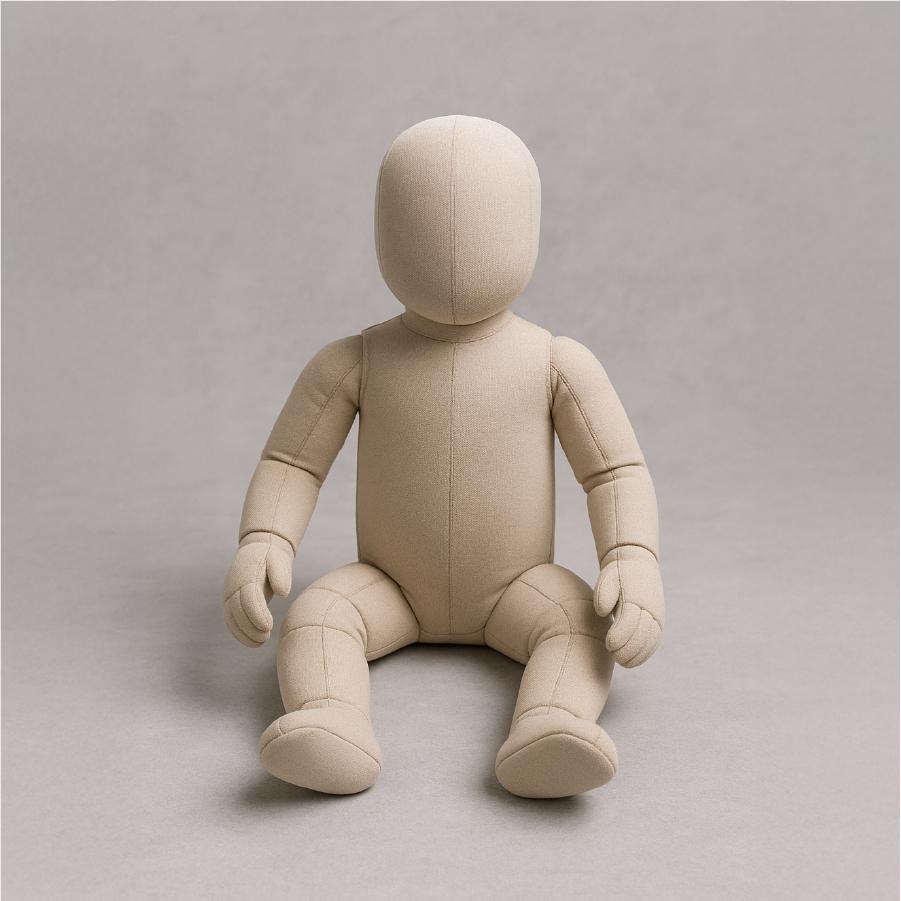
Simulation doll replicating the physiology of an 8–10 month old infant to teach motor development therapies in learning environments.
Description:
Baby.Kine is a simulation doll that reproduces the joint ranges, proportions, and physiological characteristics of an 8–10-month-old infant.
Designed for learning environments, it enables the teaching of motor development therapy practices in a safe, realistic, and accessible way.
The project is grounded in a health-design methodology, integrating needfinding, digital prototyping, and sustainability criteria.
It includes a leasing-based business model for educational institutions and a circular approach that allows maintenance, repair, and component updates without replacing the entire product.
Key insights:
Teaching motor development therapies requires realistic tools to avoid exclusively theoretical or non-representative practice.
Educational institutions need accessible and sustainable training models.
Students learn best with simulators that enable trial, repetition, and safe practice.
Relevant data:
Co-designed with faculty from the UC School of Physical Therapy.
Full digital prototype + preliminary functional testing.
Modular and repairable system.
Textile “skin” with variable densities to simulate body tissue.